
Motorola XTS 5000 User Manual: A Comprehensive Guide
This manual details the Motorola XTS 5000 Series portable radio, approved for the Alaska Land Mobile Radio (ALMR) system, alongside other vendor options.
The Motorola XTS 5000 Series portable radio represents a robust communication solution, specifically approved for use within the Alaska Land Mobile Radio (ALMR) system. As one of three vendor-approved portable radios, it ensures interoperability and reliable connectivity for essential operations; Upon powering on, the XTS 5000 typically reverts to the last selected channel, offering seamless resumption of communication.
This guide provides comprehensive instructions for operating the radio, covering functional controls and navigating its features. Understanding the display indicators and soft keys is crucial for efficient use, particularly within the ALMR network.
Key Features and Capabilities
The Motorola XTS 5000 boasts several key features for reliable communication. Its functionality centers around a user-friendly interface, utilizing “dot soft keys” – the 1, 2, and 3 dot Menu Select Buttons – to access displayed functions. The radio remembers the last selected zone and channel, resuming operation seamlessly upon power-up;
Crucially, the XTS 5000 supports Talk Permit Tones, indicated by three quick beeps, confirming transmission readiness. It’s designed for use within the ALMR system, offering compatibility and integration with existing infrastructure. Navigation is streamlined via a 4-way Navigation Button and a 16-Position Select Knob.
Getting Started
Begin by inspecting your new XTS 5000 radio. Ensure all components are present and undamaged before proceeding with battery installation and initial setup procedures.
Unboxing and Initial Inspection
Carefully unpack the Motorola XTS 5000 radio and verify the contents against the packing list. Inspect the radio body for any physical damage incurred during shipping, such as cracks or dents. Check the antenna for bends or breaks, ensuring a secure connection point.
Confirm the battery and charger are included and visually inspect them for any signs of defects. Ensure the accessory connector is intact and undamaged. Retain the original packaging for potential warranty claims or future transport. Report any discrepancies or damage immediately to your supplier.
Battery Installation and Charging
To install the battery, align the battery contacts with those in the radio’s battery compartment and firmly press until it clicks into place. Ensure a secure connection for optimal performance. Before initial use, fully charge the battery using the provided charger.
Connect the charger to a suitable power outlet and then to the radio. The display will indicate the charging status. A full charge typically takes several hours. Avoid using the radio during the charging process to prevent overheating or damage.
Powering On and Off
To power on the Motorola XTS 5000, rotate the ON/OFF Volume Knob clockwise past the OFF position. The radio will display the last selected zone and channel from the previous use. Verify the display indicators to ensure proper operation. To power off, rotate the same knob clockwise back to the OFF position and hold it there briefly.
Ensure the radio is completely powered down when not in use to conserve battery life. Proper shutdown prevents accidental transmissions and potential interference. Always check the battery level before extended operation.
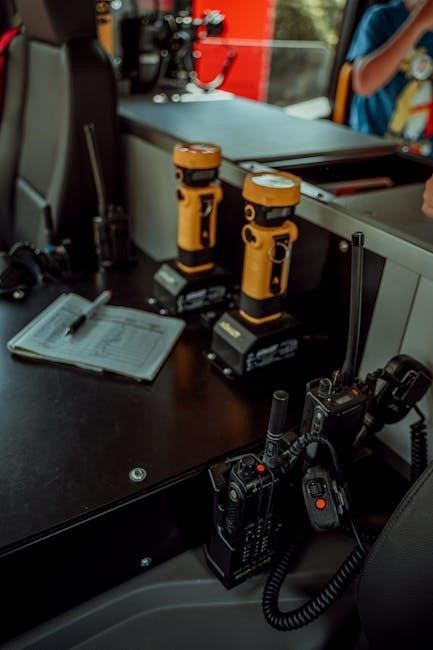
Understanding the Radio Interface
The XTS 5000 features functional controls, a display with status symbols, and navigation buttons for zone/channel selection and menu access.
Front Panel Controls Overview
The Motorola XTS 5000’s front panel incorporates several key controls for operation. The ON/OFF Volume Knob powers the radio and adjusts audio levels. A 16-Position Select Knob allows for precise channel selection within zones. The 4-way Navigation Button facilitates movement through menus and options.
Crucially, the “dot soft keys” – 1, 2, and 3 – activate functions displayed directly above them on the screen, changing based on the current programming mode. The Push-To-Talk (PTT) button initiates transmissions, and the Home Button selects the designated ADM Zone. Understanding these controls is fundamental for effective radio use.
Display Indicators and Symbols
The XTS 5000 display presents vital status information. Upon powering on, the radio typically reverts to the last selected channel. However, the display showcases numerous status symbols, though not all appear simultaneously during normal operation. These indicators communicate the radio’s current state, including zone, channel, and operational mode.
Users should familiarize themselves with these symbols for quick assessment of radio functionality. The display dynamically changes to reflect user interactions and system conditions, providing a clear visual interface for effective communication. Proper interpretation of these indicators is key to successful operation.
Navigation Buttons and Select Knob
The XTS 5000 utilizes a four-way navigation button and a 16-position select knob for intuitive control. The navigation buttons – up, down, left, and right – facilitate menu navigation and channel selection. The select knob allows precise adjustment of settings and scrolling through options within menus.
These controls are central to accessing and modifying radio functions. Users can efficiently navigate zones, channels, and programming modes using this combination. Mastering the navigation buttons and select knob is crucial for maximizing the radio’s capabilities and ensuring smooth operation in the field.

Basic Operations
Upon powering on, the XTS 5000 typically returns to the last selected zone and channel, ensuring quick access to frequently used communication settings.
Selecting Zones and Channels
The XTS 5000 allows users to navigate through pre-programmed zones and channels for efficient communication. To select a zone, press the single dot key under “ZONE” on the display; the first letter will flash. Utilize the left or right arrow keys on the 4-way Navigation Button to scroll through available zones.
Once the desired zone is highlighted, press the Home Button to confirm selection. Further refine your channel within the zone by rotating the 16-Position Select Knob until the desired channel number appears on the display. This process ensures quick and accurate channel selection for various communication needs.
Adjusting Volume
Controlling the audio level on your Motorola XTS 5000 is straightforward. The radio features an integrated ON/OFF Volume Knob that serves a dual purpose. Rotating this knob clockwise increases the volume, allowing you to hear incoming transmissions more clearly. Conversely, rotating the knob counter-clockwise decreases the volume.
Ensure the volume is set to a comfortable level, balancing audibility with preventing distortion or potential hearing damage. Proper volume adjustment is crucial for effective communication in varying noise environments.
Transmitting and Receiving
To transmit, press and hold the Push-To-Talk (PTT) button. Before speaking, listen for the Talk Permit Tones – three quick beeps – indicating the channel is clear for transmission. Release the PTT button to return to receiving mode. The XTS 5000 automatically reverts to the last selected channel upon power-up.
Ensure clear and concise communication. During incidents, dispatch or the Communications Unit will guide operations. Proper transmission etiquette ensures efficient communication across the ALMR system.

Advanced Features
The XTS 5000 offers programming modes accessed via soft keys (1, 2, 3). Home Zone configuration allows quick access to the ADMN 8 channel.
Programming Modes and Access
The Motorola XTS 5000 utilizes various programming modes, selectable through the “dot soft keys” – the 1, 2, or 3 dot Menu Select Buttons. These keys dynamically change function based on the displayed options. As you navigate different programming modes, the soft key functions adapt to the current screen.
Understanding this adaptability is crucial for efficient radio operation. The radio remembers the last selected zone and channel upon power down, reverting to it upon startup. This feature streamlines access to frequently used settings, minimizing manual adjustments. Proper programming ensures optimal performance within the ALMR system.
Using the Soft Keys (1, 2, 3 Dot Menu Select Buttons)
The XTS 5000’s “dot soft keys” (1, 2, or 3) are essential for navigation. Their function isn’t fixed; instead, they dynamically change to reflect the option displayed directly above them on the radio’s screen. This adaptability allows for context-sensitive control, simplifying complex operations.
Selecting a function is straightforward: simply press the corresponding dot key. As you transition between programming modes, observe how the soft key functions update. Mastering this system is key to efficiently accessing and modifying the radio’s settings, ensuring optimal performance and usability.
Home Zone Configuration
Upon powering on, the XTS 5000 should ideally revert to your designated “Home Zone/Channel,” mirroring the last selection before shutdown. If this doesn’t occur, manual configuration is needed. Initiate by pressing the single dot key beneath “ZONE” on the display; the first letter will flash.
Utilize the 4-way Navigation Button’s left/right arrows to select the “ADM Zone.” Subsequently, press the Home Button, then rotate the 16-Position Select Knob until “ADMN 8” appears. Ensure Talk Permit Tones (three beeps) sound before transmitting, confirming proper zone selection.

Troubleshooting
This section addresses common issues, including talk permit tone failures and display problems, offering solutions for optimal XTS 5000 radio performance and functionality.
Common Issues and Solutions
Users may encounter issues with the XTS 5000, such as the radio not powering on or displaying incorrect information. If the radio doesn’t revert to the last selected channel, verify proper battery installation and charging. A crucial step involves ensuring the correct “Home Zone” is selected.
To access the ADM Zone, press the single dot key under “ZONE”, navigate with the arrow buttons, and select “ADM Zone”. Rotate the Select Knob to “ADMN 8”. If Talk Permit Tones aren’t received (three beeps), check programming and system access.
Talk Permit Tones Troubleshooting
The absence of Talk Permit Tones – three distinct beeps – indicates the XTS 5000 may not have proper access to transmit on the selected channel. This often stems from programming issues or incorrect zone selection. Ensure you’ve correctly accessed the ADM Zone, if required, following the outlined procedure.
Verify the radio is programmed for the specific system and that your user profile has the necessary permissions. If problems persist, contact your communications unit or dispatch for assistance, as system-level configurations may need review.
Display Problems
Upon powering on, the XTS 5000 should display the last selected zone and channel. If the display is blank, ensure the battery is fully charged and properly installed. If the screen illuminates but shows garbled characters, a radio reset might be necessary – consult your system administrator.
Remember that all status symbols shown are illustrative; not all will appear simultaneously. If the display freezes or becomes unresponsive, attempt a power cycle. Persistent issues require professional servicing.

Safety and Regulatory Information
Adhere to RF exposure guidelines and battery safety precautions for optimal radio operation. Ensure compliance with all applicable regulatory statements and standards.
RF Exposure Guidelines
To ensure user safety, adhere to established Radio Frequency (RF) exposure guidelines. Maintain a safe distance between the radio and your body when transmitting. The XTS 5000 is designed to meet applicable standards, but improper use could lead to RF exposure exceeding limits.
Always use Motorola-approved accessories. Avoid prolonged transmission when unnecessary. Be aware of your surroundings and the potential for RF interference. Consult official Motorola documentation for detailed RF exposure information and best practices. Responsible radio operation minimizes potential health risks associated with RF energy.
Battery Safety Precautions
Handle the XTS 5000 battery with care to prevent damage or injury. Only use Motorola-approved batteries and chargers. Never attempt to modify or disassemble the battery pack. Avoid exposing the battery to extreme temperatures or direct sunlight for extended periods.
Do not short-circuit the battery terminals. Dispose of used batteries properly, following local regulations. A damaged battery can pose a fire or explosion hazard. Regularly inspect the battery for signs of wear or leakage, and replace it if necessary for optimal performance and safety.
Compliance Statements
The Motorola XTS 5000 radio is designed to comply with applicable regulatory standards for radio frequency (RF) exposure and electromagnetic compatibility. This device adheres to guidelines established by governing bodies to ensure safe operation.
Operation is subject to the condition that it does not cause harmful interference. Modifications without proper authorization may void the user’s authority to operate the equipment. Refer to the full compliance documentation for detailed information regarding specific standards and certifications met by this radio model.

Maintenance and Care
Regular cleaning of the XTS 5000 radio, proper battery maintenance, and appropriate storage are crucial for ensuring reliable performance and longevity.
Cleaning the Radio
To maintain optimal performance, regularly clean your Motorola XTS 5000. Use a soft, damp cloth to wipe down the radio’s exterior, removing any dirt or debris. Avoid using harsh chemicals, solvents, or abrasive cleaners, as these can damage the casing and internal components.
Pay particular attention to the display screen and controls, ensuring they are free from smudges and obstructions. For stubborn dirt, lightly dampen the cloth with a mild soap solution, then wipe dry with a clean, dry cloth. Never submerge the radio in water or any other liquid.
Battery Maintenance
Proper battery care extends the life of your Motorola XTS 5000’s power source. Avoid extreme temperatures, as both heat and cold can reduce battery capacity. When storing the radio for extended periods, remove the battery and store it in a cool, dry place, ideally around 50% charged.
Only use Motorola-approved chargers to recharge the battery, preventing damage or malfunction. Do not short-circuit the battery terminals. Regularly inspect the battery contacts for corrosion and clean them if necessary. Replace the battery when its performance noticeably declines.
Storage Guidelines
When storing your Motorola XTS 5000 radio for prolonged periods, several precautions should be taken. First, remove the battery to prevent potential corrosion or discharge. Store both the radio and battery in a cool, dry environment, away from direct sunlight and extreme temperatures. Avoid locations with high humidity or dust accumulation.
Protect the radio from physical damage during storage. A padded case is recommended. Periodically check the stored radio and battery to ensure no issues have developed. Proper storage maintains optimal performance.

Technical Specifications
The XTS 5000’s specifications include a defined frequency range and power output, alongside specific dimensions and weight details for portable operation.
Frequency Range
The Motorola XTS 5000 operates within a broad frequency spectrum, enabling versatile communication capabilities across various public safety and professional applications. Specific frequency ranges are determined by the radio’s programming and the requirements of the ALMR system or other designated networks.
Users should consult their system administrator or radio programmer for precise frequency allocations relevant to their operational zone. The radio’s ability to scan and operate across multiple frequencies enhances its adaptability in diverse communication environments. Proper frequency configuration is crucial for optimal performance and compliance with regulatory standards.
Power Output
The Motorola XTS 5000’s power output is configurable, allowing users to balance transmission range with battery life. Higher power settings maximize the radio’s reach, crucial in remote areas or challenging environments. Lower power settings conserve battery power for extended operation during routine communications.
Specific power levels are programmed by qualified technicians and adhere to FCC regulations. Users should avoid attempting to modify power output settings independently. Proper power management ensures reliable communication and compliance with established operational guidelines within the ALMR system.
Dimensions and Weight
The Motorola XTS 5000 is designed for portability and durability, essential for field operations. Its compact dimensions allow for comfortable carrying and easy access to controls, even with gloved hands. The radio’s robust construction withstands harsh conditions encountered in professional environments.
While precise measurements vary slightly with accessories, the XTS 5000 is generally manageable in size and weight. This balance ensures user comfort during prolonged use, contributing to effective communication throughout shifts and operational deployments.

Alaska Land Mobile Radio (ALMR) System Compatibility
The Motorola XTS 5000 is an approved portable radio for the Alaska Land Mobile Radio (ALMR) Communications System, alongside other vendor options.
Approved Radios on the ALMR System
The Alaska Land Mobile Radio (ALMR) system supports a variety of vendor-approved portable radios to ensure interoperability and reliable communication across the state. Currently, the Motorola XTS 5000 Series is among the approved options, providing users with a robust and dependable communication tool.
Additional approved radios can be found and reviewed on the official ALMR website at www.alaskalandmobileradio.org/radios.htm. This resource provides a comprehensive list, allowing agencies and individuals to select a radio that meets their specific operational needs and budgetary constraints while maintaining ALMR system compatibility.
XTS 5000 Specific ALMR Configuration
Upon powering up, the XTS 5000 should automatically revert to the last selected zone and channel. If the desired “Home Zone” isn’t displayed, specific steps are required for ALMR configuration. Users must access the ADM Zone using the single dot key under “ZONE” on the display, navigating with the 4-way Navigation Button.
Rotate the 16-Position Select Knob until “ADMN 8” appears, then press the Push-To-Talk (PTT) button. Successful transmission is indicated by three quick Talk Permit Tones before speaking, ensuring proper ALMR system access.
Accessing the ADM Zone
To access the ADM Zone on the Motorola XTS 5000 for ALMR compatibility, initiate the process by pressing the single dot key located beneath the “ZONE” display indicator. This action will cause the first letter on the display to flash, signaling selection mode. Subsequently, utilize the left or right arrow keys on the 4-way Navigation Button to precisely select the “ADM Zone”.
Confirm your selection by pressing the Home Button, then rotate the 16-Position Select Knob until “ADMN 8” is clearly displayed, establishing the correct zone for operation;

Appendix
This section provides a glossary of terms, contact information for support, and details regarding the Motorola XTS 5000’s warranty coverage.
Glossary of Terms
ADM Zone: The Administrative Zone on the Alaska Land Mobile Radio system, used for specific operational access. Home Zone/Channel: The radio’s default starting point upon power-up, reflecting the last selected zone and channel. Talk Permit Tones: Three quick beeps indicating permission to transmit on the ALMR system. Soft Keys: The 1, 2, and 3 dot Menu Select Buttons, whose functions dynamically change based on the radio’s programming mode. Select Knob: The 16-Position Select Knob used for navigating menus and channels. PTT: Push-To-Talk button, initiating transmission. Understanding these terms is crucial for effective XTS 5000 operation.
Contact Information for Support
For comprehensive support regarding the Motorola XTS 5000 and its integration with the Alaska Land Mobile Radio (ALMR) system, please visit www.alaskalandmobileradio.org/radios.htm. This website provides a list of approved radios and detailed configuration guides. Further assistance concerning radio functionality and troubleshooting can be obtained through your local agency’s radio communications personnel. For general Motorola support, consult the official Motorola Solutions website for contact details and resources.
Warranty Information
The Motorola XTS 5000 Series portable radio warranty is subject to the terms and conditions outlined in the original purchase agreement. Typically, Motorola provides a standard warranty covering defects in materials and workmanship for a specified period from the date of purchase. This warranty does not cover damage resulting from misuse, accidents, or unauthorized modifications. Refer to your specific purchase documentation or contact Motorola Solutions directly for detailed warranty coverage information and claim procedures. Extended warranties may also be available.